Specialized Training
High-quality rehabilitation depends on skilled, confident, and well-supported professionals. Ongoing professional development and access to specialized training are essential for improving the quality of care.
The Addis Ability Training Center provides continuing education informed by international standards and adapted to the Ethiopian context, with a strong focus on practical application, clinical reasoning, and hands-on skills.
Our aim is to strengthen the rehabilitation workforce and support the development of high-quality, sustainable rehabilitation services in Ethiopia.
Specialization in Pediatric Physiotherapy
Physiotherapy is a relatively young profession in Ethiopia—established just two decades ago, compared to over a century of development internationally—with specialized disciplines like Speech-Language Therapy and Occupational Therapy emerging even more recently, graduating their very first local cohorts in January 2019 and July 2024, respectively.
While local university education provides an academic foundation, there is a vital need for more practical, hands-on skills in everyday clinical practice and dedicated postgraduate training programs.
Because formal postgraduate specializations are not yet available in the country and continuing education is scarce, we are developing Ethiopia's first dedicated, hands-on, one-year training program in Pediatric Physiotherapy.
Created in collaboration with international experts, this program bridges the gap between generalist education and daily clinical care.
Wheelchair Service Provision Training
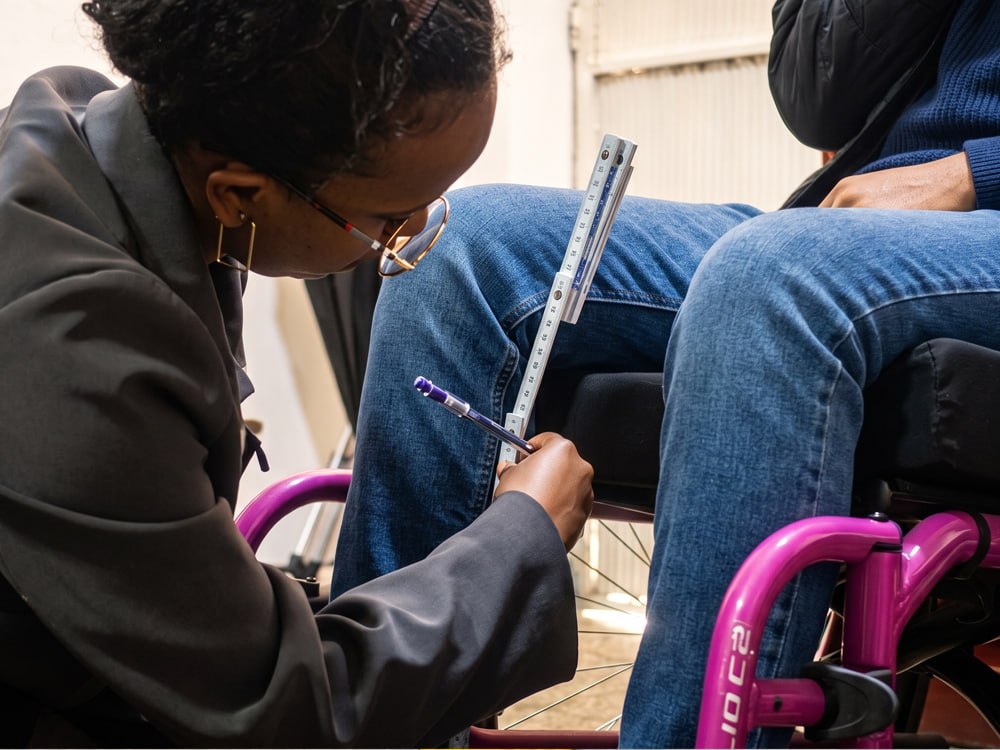
Providing a generic wheelchair, crutches, or walker without proper fitting can cause severe clinical harm—particularly to a child's developing body.
Currently, professional mobility aid provision does not exist in Ethiopia, and training based on World Health Organization (WHO) guidelines is not locally available. Devices are frequently imported and distributed without proper clinical assessment, customization, or fitting. While producing mobility aids locally is a critical long-term goal, the technical know-how and trained professionals required to build and adapt them are currently missing.
Addis Ability is filling this urgent gap. Grounded in and expanding beyond WHO guidelines, this specialized training in wheelchair service provision equips practitioners with the essential clinical and technical knowledge needed right now—from conducting precise physical assessments and customizing devices to individual anatomical needs, to managing ongoing maintenance and repairs.
Target Audience:
- Practicing Technicians currently working in rehabilitation environments who seek to specialize in customized wheelchair provision.
- Occupational Therapists & Physical Therapists with practical, hands-on mechanical skills looking to specialize in wheelchair provision.
The curriculum was developed by the Addis Guzo Center of Excellence.
Special Needs Assistant Training
In Ethiopia, dedicated support staff for children with disabilities currently do not exist within the formal education system, yet they are urgently needed to make true inclusion possible. To address this critical gap, we are developing Ethiopia's first Special Needs Assistant Training program. This initiative establishes the most essential, foundational level of care and guidance—bridging the gap between educational environments that struggle to accommodate children with diverse needs and every child's basic right to participate.
Key Aims of the Training:
- Enabling Presence & Access: Hands-on assistance with mobility, positioning, and personal care so children can safely and comfortably attend school or daycare.
- Bridging Communication & Engagement: Guidance to help children follow daily routines, participate in activities, and express basic needs.
- Preventing Isolation: Dedicated support ensuring children with physical or developmental delays are actively included rather than isolated.
- Unlocking Capacity: Individual assistance that frees classroom teachers to manage whole groups while easing the burden on families.
- Stepping Stone to Inclusion: A practical, entry-level standard of care that transforms inclusive policy into a realistic local reality.